A toilet usually keeps running because water is passing from the tank into the bowl or because the fill valve allows the tank to rise into the overflow tube. If it refills briefly every few minutes, the tank may be losing water slowly between flushes. Listen until the normal refill should have stopped, then look at where the water is going.
A ten-minute dye test can confirm that water is getting from the tank to the bowl. Watching the tank level and the overflow helps narrow down the cause before you order a part or arrange a repair.
What happens inside the tank after you flush?
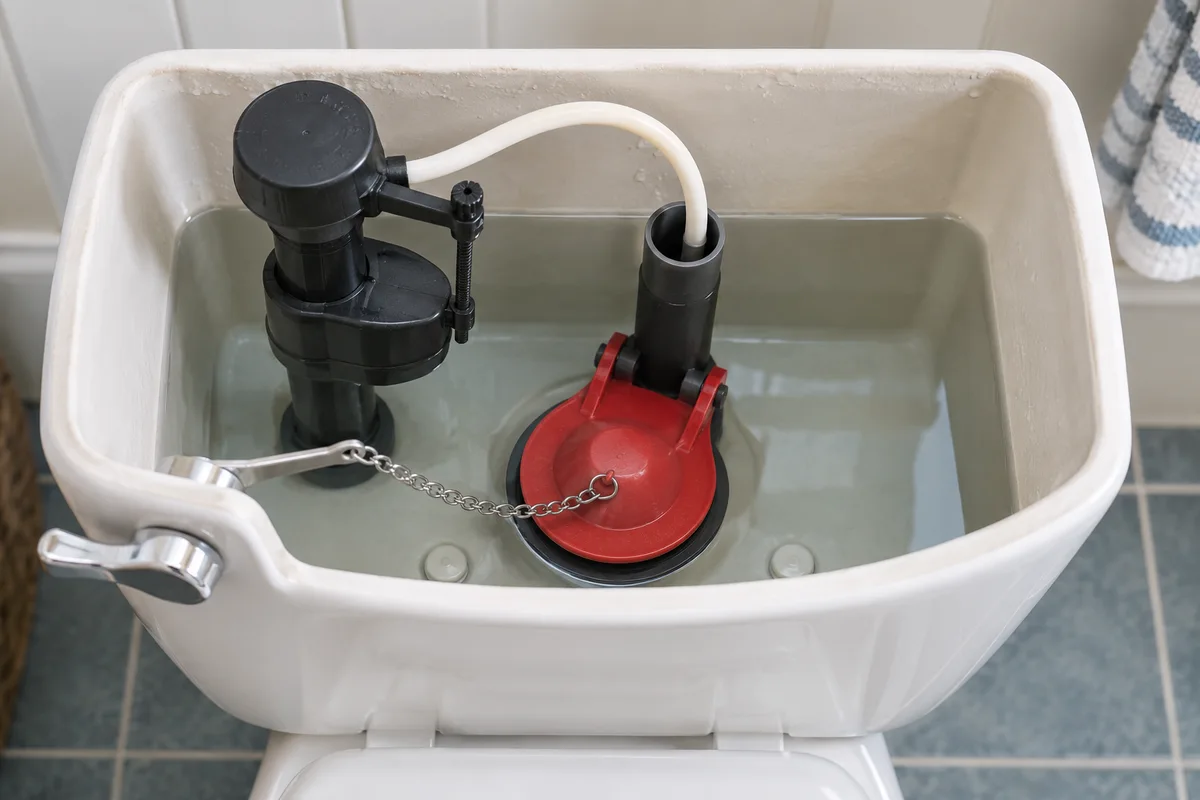
In a typical tank toilet, pressing the handle lifts a flapper or opens a canister. Water leaves the tank through the flush valve. The seal then closes so the tank can hold water again. A fill valve refills the tank and stops when the float reaches its set level. A brief refill is part of the normal flush cycle.
Listen for the point when filling ends. A steady hiss that never stops gives you a different clue from a quick refill that starts again after several minutes of quiet. Watch for a slight ripple in the bowl after the flush cycle. Some leaks are easiest to notice when the room has been unused and quiet.
If you lift the tank lid, use both hands and set it on a stable, protected surface. Leave the lid in place if it is heavy, awkward to move or connected to a flush button you cannot release safely.
Why does the toilet refill when nobody flushed?
An intermittent refill often means the tank level has dropped far enough for the fill valve to open again. On a flapper-style toilet, look to see whether the chain catches or holds the flapper slightly open. Some toilets use a canister with a seal at its base. In either design, the sealing surface needs to close flat so water stays in the tank.
Watch what happens after the handle returns to its resting position. Note whether the flapper settles fully, whether the chain appears tangled and whether the tank level gradually drops. Take a photo before moving parts. If you are renting, report those observations to the person who can approve the repair.
A worn seal and a loose or binding handle can look similar from across the room. Checking how the mechanism closes gives you a more useful clue than the sound alone.
How do you check for a silent tank leak?
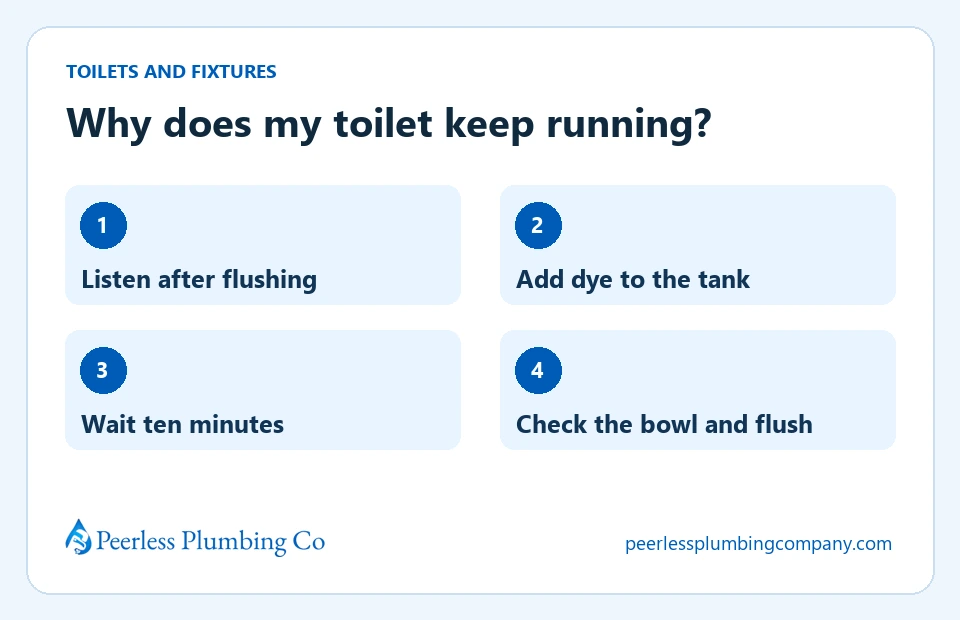
Wait for the tank to finish filling. Add a few drops of food coloring to the tank and leave the toilet alone for ten minutes. Check the bowl before flushing. If the water in the bowl changes color, water is traveling there from the tank. Flush after the check to rinse out the dye.
EPA WaterSense recommends this check for silent leaks. Write down the result for each toilet you test. Combine it with what you saw at the overflow tube. A dye result confirms that water reached the bowl. It takes another look at the tank to determine whether it passed the seal or went into the overflow.
If there is no color and the sound still returns at other times, tell the plumber when it happens. A short check covers only the period when you watched the fixture.
What if water keeps flowing into the overflow tube?
Look at the tall open tube in the tank after the normal refill should have ended. Water spilling over the top suggests the fill system has let the level rise too far. The float might be obstructed or set too high, or the valve may be failing to close. On models with a marked waterline, compare the settled level with that mark.
If a refill tube or float was recently moved, tell the technician or compare its position with the manufacturer's instructions for that model. The layout varies between toilets. Leave a stuck valve alone if turning it could damage the connection. Photos of the tank and the model number make it easier to identify the equipment before parts are purchased.
Is a puddle near the toilet part of the same problem?
A puddle is a separate clue. Look from a dry spot and note whether moisture starts near the supply hose, the tank connection or the base. Record whether the toilet has been sitting unused or the puddle forms only after flushing. Condensation can also collect on the outside of the tank. Report the first place you see water and whether the outside of the tank feels damp.
Stop using the toilet if flushing makes water collect around it or if the bowl threatens to overflow. If the shower or another nearby drain gurgles at the same time, mention it when you call. That information helps the plumber decide whether to look beyond the toilet tank and inspect drainage.
When is it time to arrange toilet repair?
Arrange a visit if the toilet keeps refilling, the dye test shows a leak you cannot resolve, or you see water on the floor. Report whether the toilet runs continuously or only between flushes, and have the model and tank photo ready if you could gather them safely.
Ask which component is causing the loss and how the repair will be checked. A compatible tank part can often address the problem. The condition of the fixture, the supply valve and the availability of parts all help determine whether a repair or replacement makes sense.
After a repair, listen through a complete flush and refill cycle. Later, when the toilet has been unused, check whether the brief refill sound has returned. If the original problem was intermittent, tell the plumber how long it took for the sound to come back. That timing helps decide what needs a second look.
Peerless Plumbing offers toilet repair in Dallas–Fort Worth. Call the number for your service area to discuss what you’re seeing.