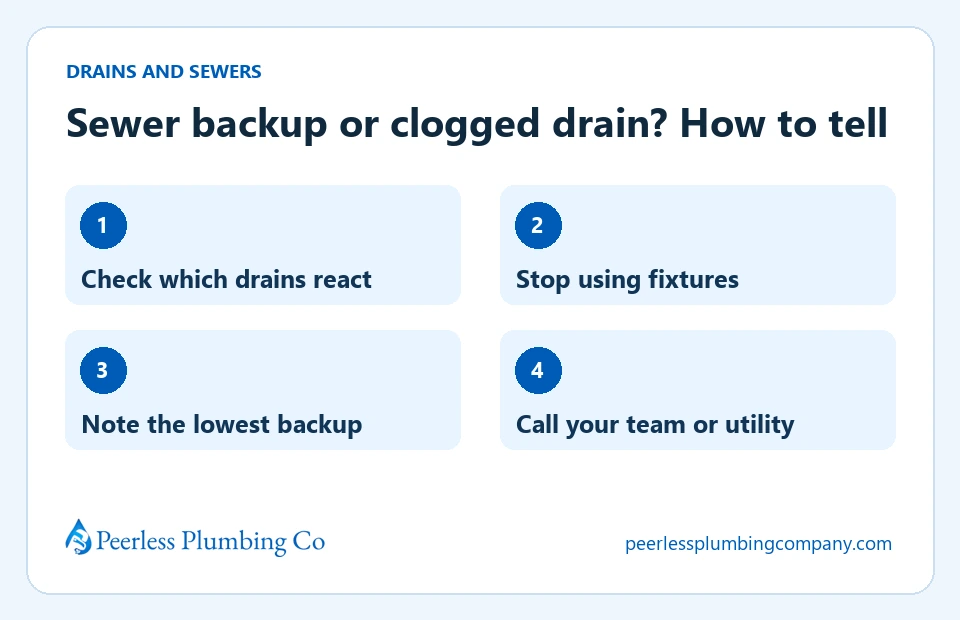
A clogged drain often affects one fixture. A backup in a shared drain or sewer line is more likely when several fixtures slow down together or when water from one fixture comes up through another. If wastewater is already backing up, stop flushing and pause the washer and dishwasher before trying to work out where the blockage is.
The number of affected fixtures, the lowest place where water appeared and whether neighbors have similar trouble all help narrow the possibilities. Use what you already observed. Running extra water to reproduce a backup can make the overflow worse.
When does a clog look limited to one fixture?
Start with what worked normally before the problem appeared. If a bathroom sink takes several minutes to empty while the toilet and shower work as usual, report the sink first. Its stopper, trap or branch drain gives the plumber a starting place. A kitchen sink that backs up on both sides is still one fixture area because the two bowls may share the same connection below.
Consider what changed around the time it began. A shower that became slow gradually is a different report from a sink that stopped draining after something fell into it. Mention any maintenance already attempted and whether it worked for a day, a week or only a single use.
If you already used a chemical cleaner, share the name and timing before anyone opens the drain. Keep the container or take a photo of its label. Avoid adding more products to standing water.
Which signs point to a shared drain line?
Think about which fixture sent water down the drain and which fixture reacted. A flush that makes water rise in the shower, or a washing machine that sends water out of a utility room floor drain, can show that both paths meet before the restriction. Tell the plumber if the symptoms are in one bathroom or span different floors and rooms.
The first drain to overflow is often a low opening. Give its exact location and mention whether the liquid looked like used water. If the only symptom is occasional gurgling, describe when it happens. The plumber can use the other observations to decide whether the branch drain, venting or a larger section of the system needs attention.
In a multi-unit property, tell management which units are involved. They may have access to shared cleanouts and can tell you whether another tenant has already reported the issue.
What should you do while wastewater is backing up?
Pause water use throughout the affected property. Let others know to hold off on flushing, showering or starting another laundry cycle. Keep people and pets away from the spill, and stay clear of standing water near electrical equipment. Take photos only from a dry place you can reach without crossing the affected area.
Write down when the overflow started, what was in use and whether it continues after you stop using water. Share that information with the plumber or utility. In a shared building, also tell the property manager so they can coordinate with occupants whose fixtures may feed the same line.
Arrange cleanup based on the size of the spill and the materials it touched. A plumbing assessment addresses the backup. Cleanup may require separate help, particularly if wastewater has soaked into flooring or wall materials.
Could the blockage be in the public sewer?
A private sewer lateral carries wastewater from a building toward the public main. For Fort Worth Water customers, the city explains that wastewater continuing to rise with household fixtures off, or similar problems at nearby properties, can be a reason to report a possible main blockage. An overflow from a public sewer structure also belongs with the utility.
If you live outside Fort Worth Water's service area, use the reporting instructions on your own utility bill or website. Provide the address, whether neighbors are affected and the location of any outside overflow you saw. Ask how the utility will determine whether the issue involves the public line and what you should do while it checks.
Water that comes up only when your own fixtures are used is a useful clue for a private-line assessment. Keep notes on the pattern even if the utility has already ruled out a public issue.
Why does a backup return after the line was cleared?
Restored flow tells you that water could get through after the work. If the same symptoms return, bring the earlier invoice or inspection notes and share how long the improvement lasted. Ask whether the assessment can locate the restriction and whether the line can be checked once it is clear enough to inspect. The condition of the pipe and access affect which checks are possible.
Share any known changes near the line, such as excavation or landscaping, without assuming they caused the problem. If the last backup affected different fixtures, give both sets of locations. For everyday prevention, Fort Worth Water advises keeping fats, oils and grease out of drains and disposing of wipes in the trash.
Ask for the location of any issue the plumber finds and whether the finding was visible during the inspection. Keep any images or video with the invoice. If the problem returns months later, a record of the earlier finding helps the next visit start with specific information.
What should you have ready when you call?
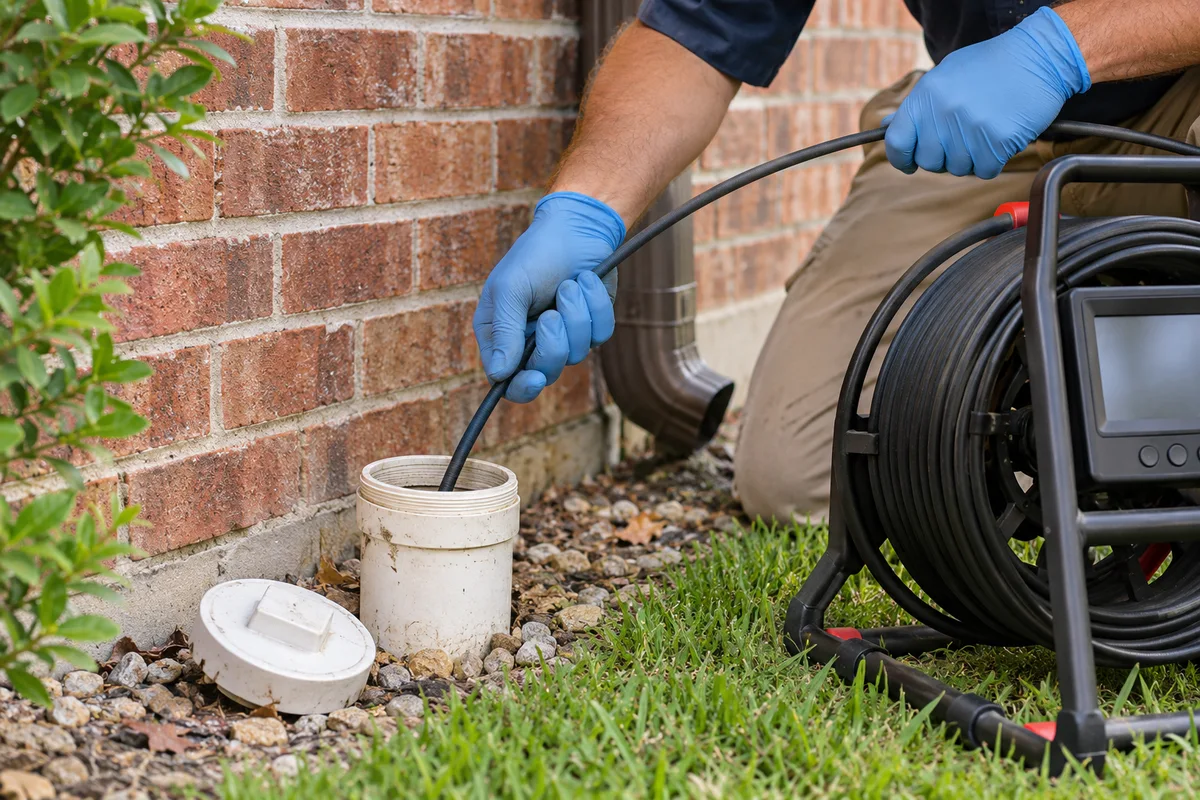
Give the address, the first fixture affected, the lowest point where water appeared and whether it is still rising. Mention any accessible cleanout, but leave its cap in place during a backup. If the utility already checked the public main, say what it found and when.
For a repeat problem, ask what the proposed work will establish and how the plumber will check flow afterward. If management has to approve work or unlock a utility area, arrange that contact before the visit.
Peerless Plumbing offers sewer line service in Dallas–Fort Worth. Call the number for your service area to discuss what you’re seeing.