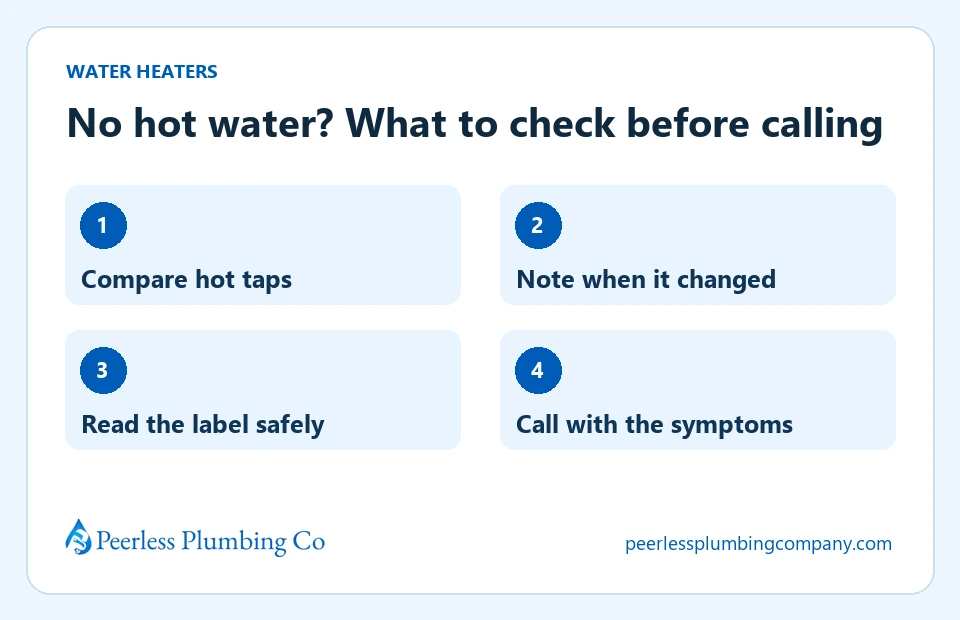
If you have no hot water, compare a nearby sink with the affected shower or faucet. Hot water at one fixture and cold water at another can point to a problem at that fixture. When several taps are cold, gather information about the heater, its supply and any equipment shared with other units.
The most useful details are whether the water ever warmed up, how long it stayed hot and whether the heater shows a code. You can collect them without opening a service panel. If you smell gas, leave the area and call 911 and your gas utility from a safe location.
Is one fixture cold or is the whole property affected?
Run a hot tap that normally heats up quickly. Give it the time it typically takes to warm. Compare it with a second fixture, and note whether the flow itself is weaker than usual. If the kitchen sink and bathroom sink get hot but the shower stays cold, mention the shower specifically. A cartridge, mixing valve or temperature limit setting can affect that fixture.
If cold water flows normally while the hot side has weak or no flow, report that difference too. Low flow and normal flow with cold water lead to different checks. When neither side has water, find out whether the entire property has lost supply before assuming that the heater failed.
For a building with shared equipment, ask management whether other units have reported trouble. If only one part of the building is affected, the manager may be able to identify which heater or plumbing branch serves it.
A distant tap that eventually warms up can be a delivery delay. If it has always taken about the same amount of time, note that baseline. A sudden change in the wait, especially at fixtures close to the heater, gives the technician a better picture of the problem.
What if the water starts hot and then turns cold?
Track when it changes. A storage heater can run short during back-to-back showers or simultaneous appliance use, then recover after demand drops. If the same household routine used to work, tell the plumber when the available hot water began to change. The Department of Energy uses first-hour rating to describe how much hot water a fully heated storage unit can deliver in the first hour.
A tankless heater warms water as it flows. Its performance depends on how much water is moving through it and how far it has to raise the incoming temperature. Note whether the change happens only when a second tap opens, or during a single shower with other fixtures off. Include any visible code. That comparison is more informative than saying the unit runs out.
What can you check safely at the heater?
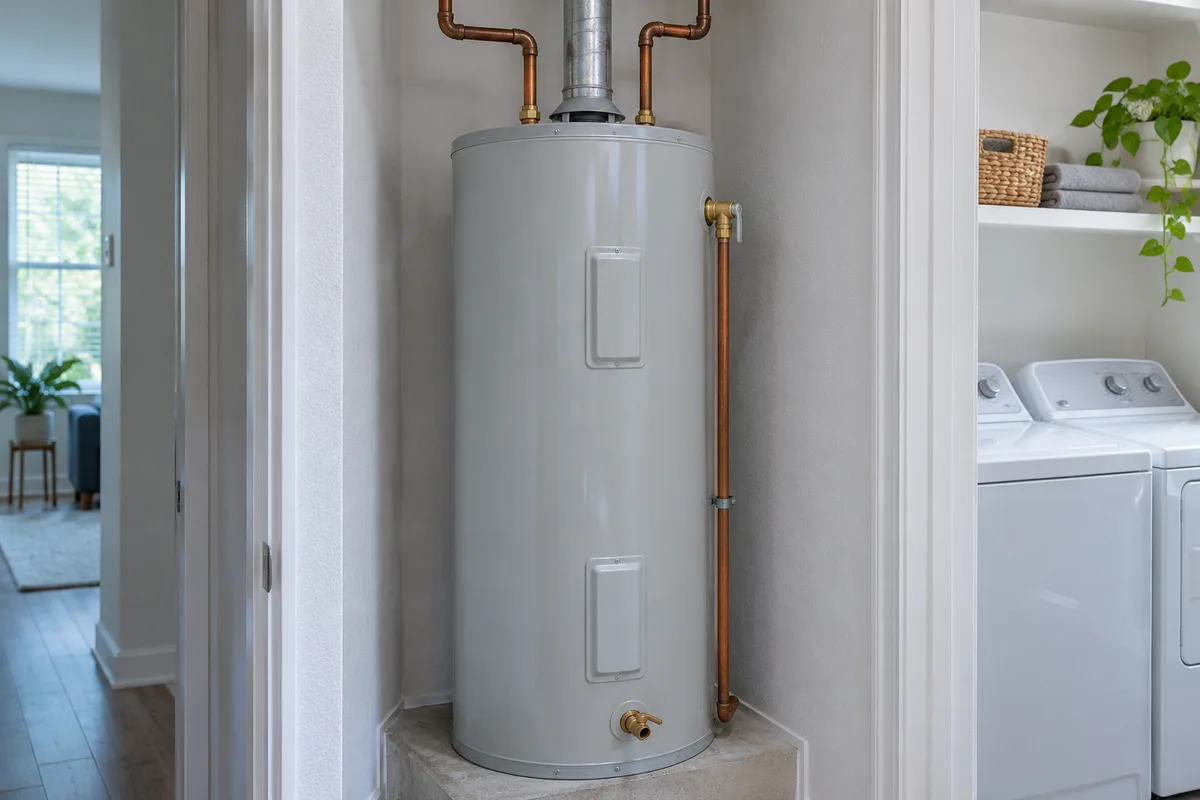
Look from a dry spot. If the label is visible, take a photo of the model and serial number. Record any display message as written, including letters and numbers. Note whether the display is blank and whether the problem started after a power outage or work on the property. A manual for your exact model may explain what information the display is reporting.
Leave the cabinet closed and the burner, wiring and controls in place. Tell the technician if a breaker has tripped or the unit repeatedly loses power. Keep the original code in your notes if the display clears. If you smell gas or suspect a gas leak, get everyone away from the area and call emergency services and the gas utility from a safe distance.
What does water around the heater tell you?
Describe where you can see moisture without touching or moving the heater. A drip at a visible connection, water in a drain pan and a puddle spreading from beneath the unit are different observations. Note whether it appeared while hot water was being used and whether more water is collecting. A photo taken from a dry area helps show the location.
Keep away from standing water near equipment or outlets. Leave relief valves and their discharge pipes in place and never cap a line to stop a drip. If water is spreading and the private water shutoff can be reached safely, close it and seek help. Tell the technician which valve was closed so they know the state of the system when they arrive.
How do you compare repair and replacement?
Ask which fault was found and how it was confirmed. A repair quote should make it clear which part or connection the work covers and how the unit will be checked afterward. Ask whether parts are available for the exact model and whether a warranty covers parts, labor or neither. A label photo and installation paperwork help you check the terms.
If replacement comes up, describe how the household actually uses hot water during its busiest hour. Ask how the proposed equipment will handle that demand and what changes it needs for space, venting, power or drainage. Compare the installed scope and future maintenance along with the equipment price. Two heaters that fit the same closet may have different installation requirements.
If the equipment has different operating modes, tell the technician which one you normally use and whether anything changed recently. The model manual can explain what those modes are designed to do. Have that information ready when discussing whether the unit is meeting its expected performance.
When should you call about no hot water?
Arrange an assessment when several fixtures stay cold during normal use, the heater keeps shutting down or the hot supply has changed without an obvious reason. Report an active leak promptly. If only one shower is affected, describe the working taps as well so the visit can start in the right place.
Bring the model, visible code and timing of the change. For a rental or managed property, have the contact who can give access and approve work. If a previous repair helped briefly, share when it happened and how soon the problem returned.
Peerless Plumbing offers water heater repair in Dallas–Fort Worth. Call the number for your service area to discuss what you’re seeing.