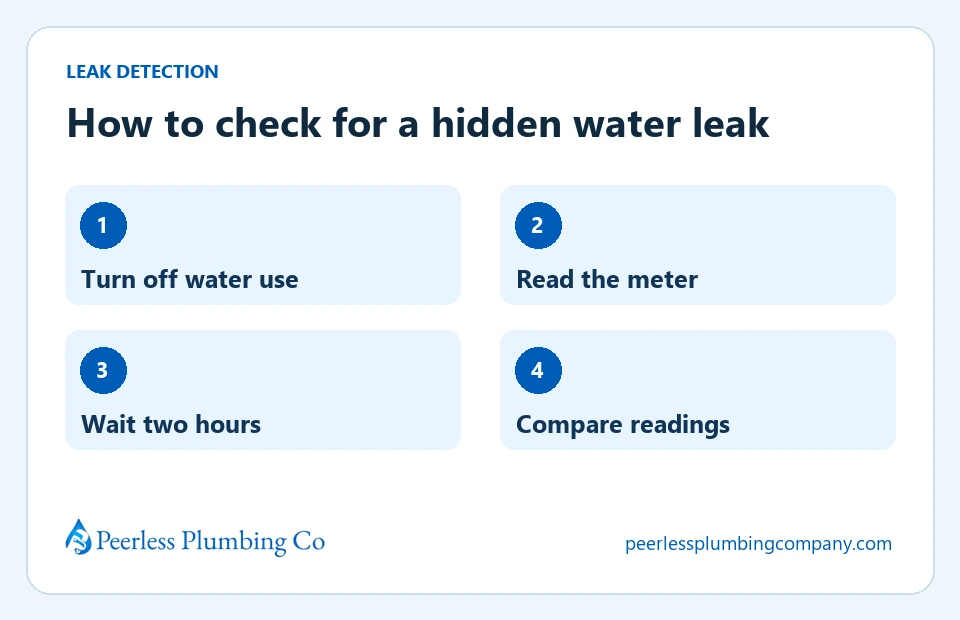
To check for a hidden water leak, compare two water meter readings taken two hours apart while nobody uses water. Pause irrigation and automatic appliances during the check. If the reading changes, water moved through the meter during that period. A second check, such as testing a toilet tank with food coloring, can help narrow down where it went.
A meter reading and a damp spot can tell you different things. Use the meter to look for unexplained water use, and record when and where moisture appears. If water is already spreading, skip the test and deal with the active leak first.
What changed on your water bill?
Compare water volume as well as the dollar amount. Look at the dates and length of the billing periods, then account for recent irrigation, visitors, a pool refill or a change in the number of people at home. A bill from the same season last year may be a better comparison than the prior month if outdoor use changes with the weather.
If your utility offers interval data, check when the extra use occurs. Fort Worth Water customers can use MyH2O to review the previous day's hourly readings and set alerts for continuous flow. The portal is useful for seeing patterns over several days. Use a safe meter check to see what is happening during a specific period today.
Write down the first date the higher use appears. A technician can compare that timeline with a new fixture, a recent plumbing repair or a sprinkler schedule change.
For example, daily use at the same early morning hour may line up with sprinklers, while steady use all night warrants checking for something running continuously.
How do you do a two-hour meter test?
Pick a quiet window and tell everyone who uses water at the property. Finish laundry and dishes before you start. Pause irrigation, and account for equipment that may draw water on its own, such as an ice maker or a water softener regeneration cycle. Avoid shutting off equipment that you need to keep operating safely.
Read the meter only if it is accessible and your utility allows it. Take a photo that shows the whole display, then record the time. Wait two hours without using water and photograph the display again. Compare the same digits and units on both readings. Leave utility seals and controls alone, and ask the utility how to get a reading if the meter is hard to reach.
If somebody flushed a toilet or ran a tap, repeat the check during another quiet window. An unchanged reading applies to the period tested. A leak that occurs only while a fixture drains can still leave a stain without showing up during a no-use test.
Which fixtures can leak without making a puddle?
Start with tank toilets because water can escape straight into the bowl. Once the tank has finished filling, add a few drops of food coloring to the tank. Wait ten minutes without flushing. Color in the bowl points to a path from the tank to the bowl. Flush after you read the result to rinse away the dye, and test one toilet at a time so you can label the results.
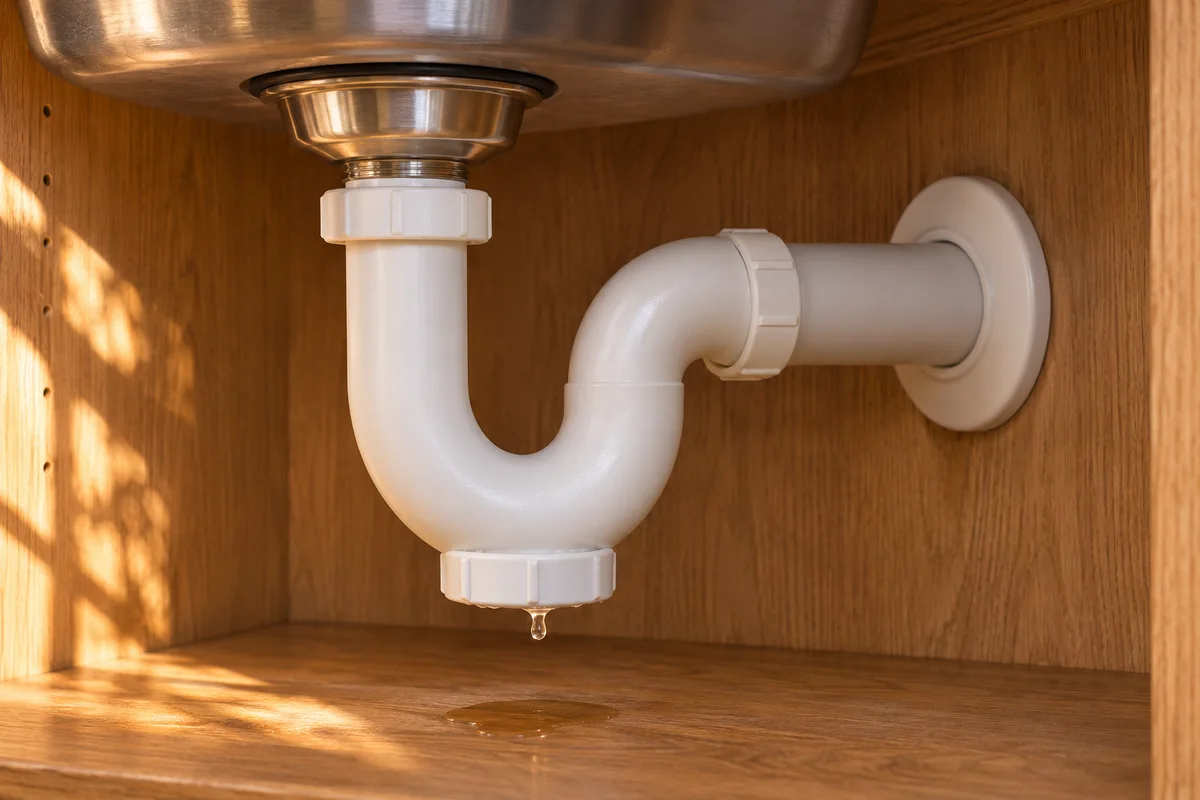
A small faucet drip can also escape attention when it falls directly into a sink. Check faucets after they have been fully closed, and look at visible supply connections under sinks from a dry spot. Empty a crowded cabinet before looking if you can do it safely. An old mark on the cabinet floor can help you decide where to look for fresh moisture later.
What does the timing of a damp spot tell you?
A mark that darkens after an upstairs shower suggests a different set of checks from a spot that grows overnight while the bathroom is unused. Record the room, where the water first showed up and which fixture had been running. The place where you see water can be some distance from where it entered the wall or floor.
Also record events that may have nothing to do with a supply pipe, such as wind-driven rain or water spilled while washing the floor. A musty cabinet or a stain is a reason to look closer. Tell the plumber what you observed and when so they can consider several possible sources.
Take pictures from a dry spot using the same angle each time. If the stain is spreading or a ceiling is sagging, stop using the affected fixture, stay clear of the area and arrange help.
How do you narrow down an outdoor clue?
For a wet patch in the yard, compare it with the most recent rain and sprinkler cycle. Note whether it lines up with a sprinkler head, outdoor faucet or path to the house. A patch that remains wet during a dry spell is worth reporting, especially if the meter also shows use while indoor fixtures and irrigation are off.
If irrigation has its own meter or account, label which meter you read. Ask the utility or property manager how the property is set up if you are unsure. At a rental or a building with shared water service, coordinate with management before changing any schedule or operating a valve. Bring the observations to the person who can access the system.
When should you arrange leak detection?
Call if the meter keeps registering water during a valid no-use window, the same area keeps getting wet, or you cannot identify where an active leak starts. Stay away from water near electrical equipment. Close the private shutoff only if you can reach it safely.
For a visit, have your address, the two readings, photos and the timing of the symptom ready. If you had recent work done, share what was changed and where. Those details give the technician a starting point for choosing which fixtures, supply lines or drains to check.
Peerless Plumbing offers leak detection in Dallas–Fort Worth. Call the number for your service area to discuss what you’re seeing.